
The inside knowledge stack
Information becomes knowledge – for people, teams and AI agents.
The inside knowledge space
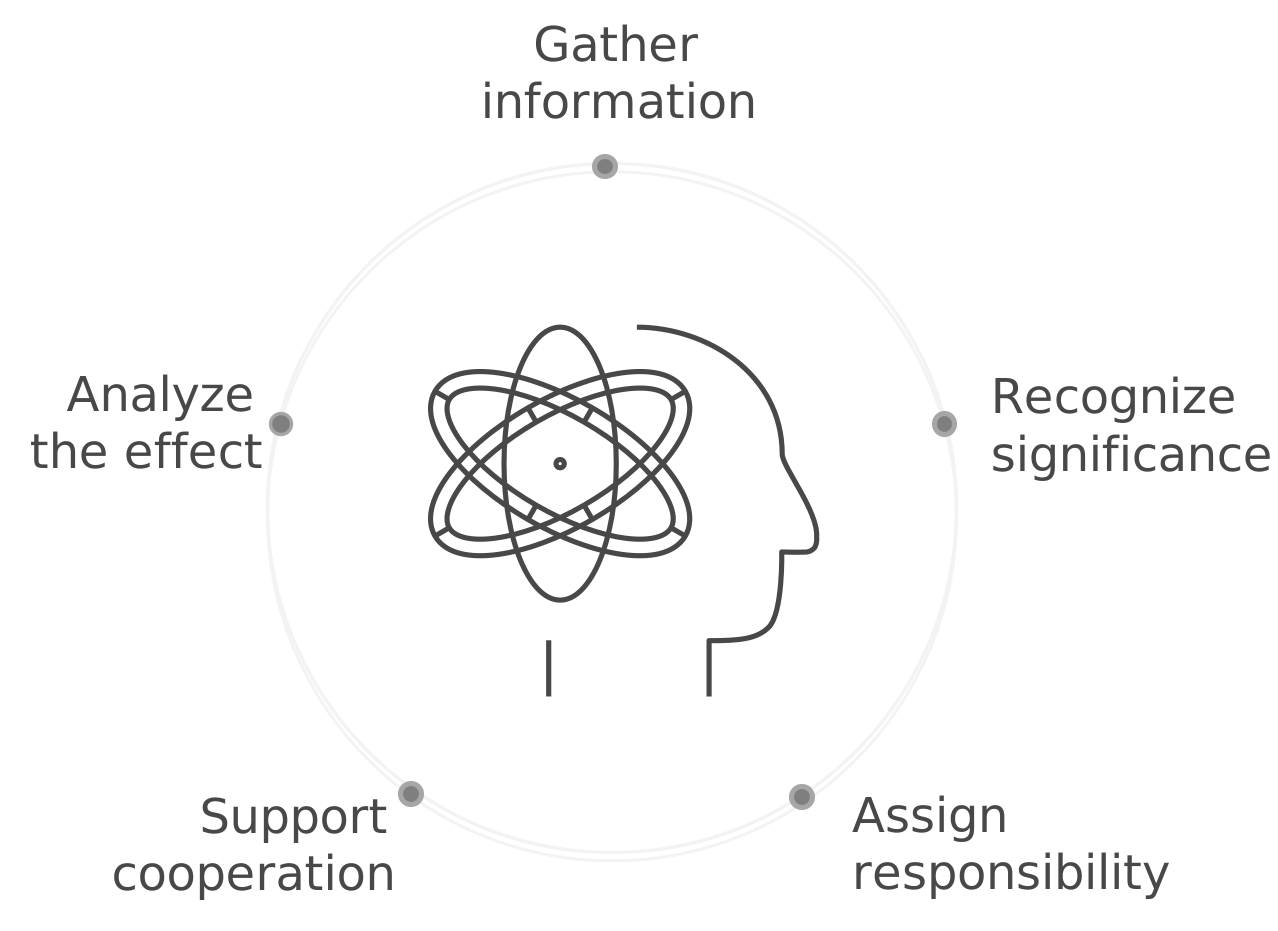
Information, documents, and experiences are just the beginning. This knowledge is only embedded in the organization once its significance, associated responsibilities, and impact on collaboration become apparent.
The inside Knowledge Stack makes these connections visible. It shows where knowledge is generated, how it is organized, who is responsible for it, and how it provides guidance for decision-making.
In this way, individual pieces of content become a structured knowledge ecosystem that is usable by people and interoperable with AI agents.
You can:
→ Systematically organize knowledge
→ Identify gaps in the knowledge system
(Black Holes & White Rabbits)
→ Create context for reliable AI responses
The layers of the Knowledge Stack
The stack consists of several semantic layers which together form the knowledge space of inside:
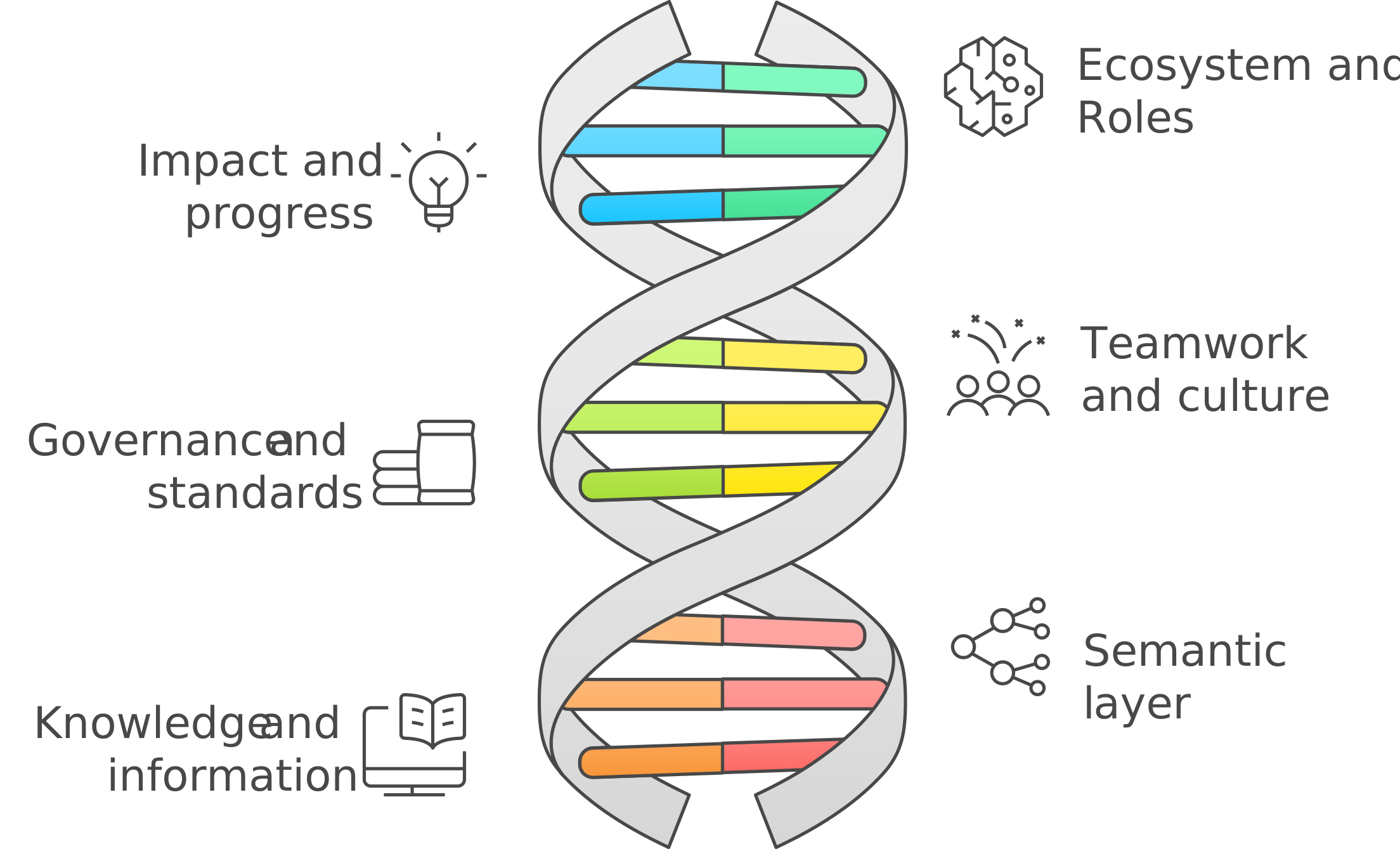
6. Ecosystem and roles
Organisation, networks, responsibilities. Shows where knowledge is located and how people operate within it.
5. Impact and development
Decisions, reflection, learning, pattern recognition. This is where the actual impact of knowledge takes place.
4. Collaboration and culture
Practices, exchange, feedback, discussion, methods. The level at which knowledge comes to life in everyday practice.
3. Governance and Standards
Roles, processes, quality criteria, areas of responsibility. The framework that creates order, security and traceability.
2. Semantic Layer
Language, terms, meaning. This is where the meaning of things is clarified – for both people and AI.
1. Knowledge and Information
Raw information, documents, data, facts. The foundation for all other levels.
What the stack reveals
The Knowledge Stack makes it easier to identify typical weaknesses in a knowledge system:
- a lot of information, but no clear relevance
- a lot of content, but a lack of responsibility
- a lot of discussions, but no documented output
- a lot of sources, but no solid foundations
- a lot of AI responses, but too little reliable context
This is particularly crucial for AI. An AI agent does not simply need ‘more data’. It needs the right context:
What is the source? What constitutes working knowledge? What has been approved? What applies in which context?
The inside Knowledge Stack creates a common language for this purpose.
Example: Building a new field of knowledge
If an organisation needs to develop a new area – such as ESG, information security or a new product – in a structured way, the stack provides guidance.
- First, sources, data and existing information are gathered.
- Next, terminology, structures and metadata are clarified.
- Roles, responsibilities and approval processes are then defined.
- The topic is then addressed in practice, discussed and further developed within teams and communities.
- Finally, reports, reviews and reflection sessions show the impact that is being achieved.
In this way, knowledge grows not by chance, but in a traceable manner.
Working with the Knowledge Stack
The stack can be used as a simple validation framework:
- Are there sufficient sources and information?
- Are terms, metadata and relationships clearly described?
- Are roles, responsibilities and approval processes in place?
- Is knowledge being further developed within teams and communities?
- Is it clear what impact knowledge has in everyday life?
- Is it clear who is involved and where responsibility lies?
In this way, a topic becomes not just a collection of content, but a robust knowledge space.
Impact on AI agents
The Knowledge Stack is particularly important for inside AI-agents.
- It helps them to better categorise questions and combine relevant contexts
- An agent can distinguish whether an answer should be based on sources, foundational information, topic-related posts or current discussions.
- This ensures that answers are not only faster but also more robust.
AI cannot replace knowledge management. It becomes effective when knowledge management provides the context that AI requires.
Conclusion
The inside Knowledge Stack reveals that knowledge is more than just stored information.
It is a thinking model, a structural aid and a quality framework all in one. Knowledge is created through the interplay of content, meaning, responsibility, collaboration and impact.
For decision-makers, it highlights reliability. For knowledge-managers, it reveals gaps and areas for development.
Experts can see how contributions can be linked together.
And for AI agents, it provides the context needed to generate reliable answers.
The Knowledge Stack serves as a compass for reliable knowledge management within an organisation.